Register And Verify
Create your SLP account from login page, verify your email address, and wait for administrator approval before using the clinical workspace.
This guide explains how SpeechThrive works for Speech-Language Pathologists, patients, and parents. Use the role buttons to focus the page on your journey, then open screenshots in fullscreen whenever you need a closer look.
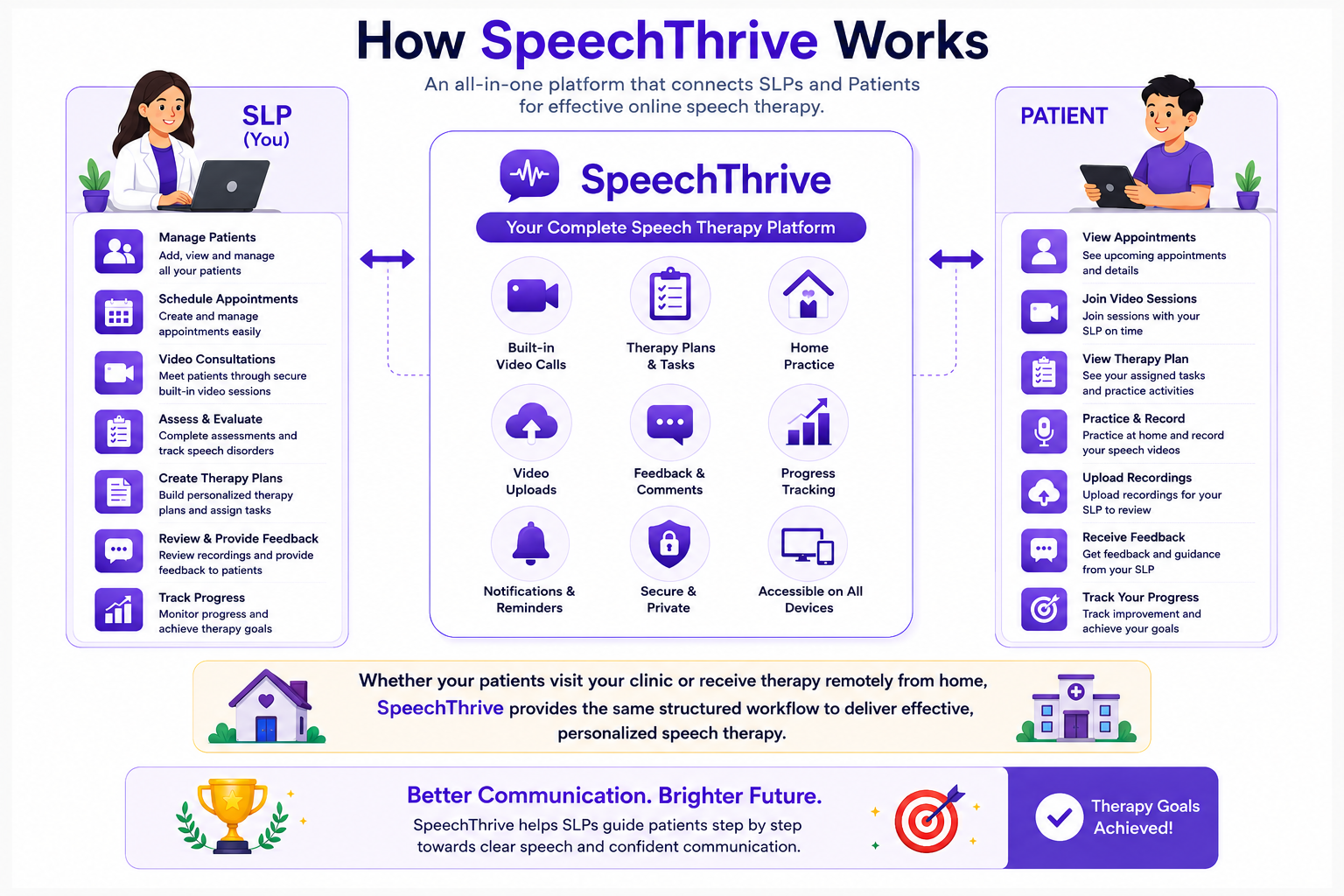
SpeechThrive uses role-based access. SLPs create professional accounts, while patient accounts are created by the treating SLP so therapy, messages, plans, videos, and notes stay connected to the correct clinical relationship.
Create your SLP account from login page, verify your email address, and wait for administrator approval before using the clinical workspace.
After approval, log in and accept the SLP service agreement. You will then enter your dashboard and can begin setting up patients.
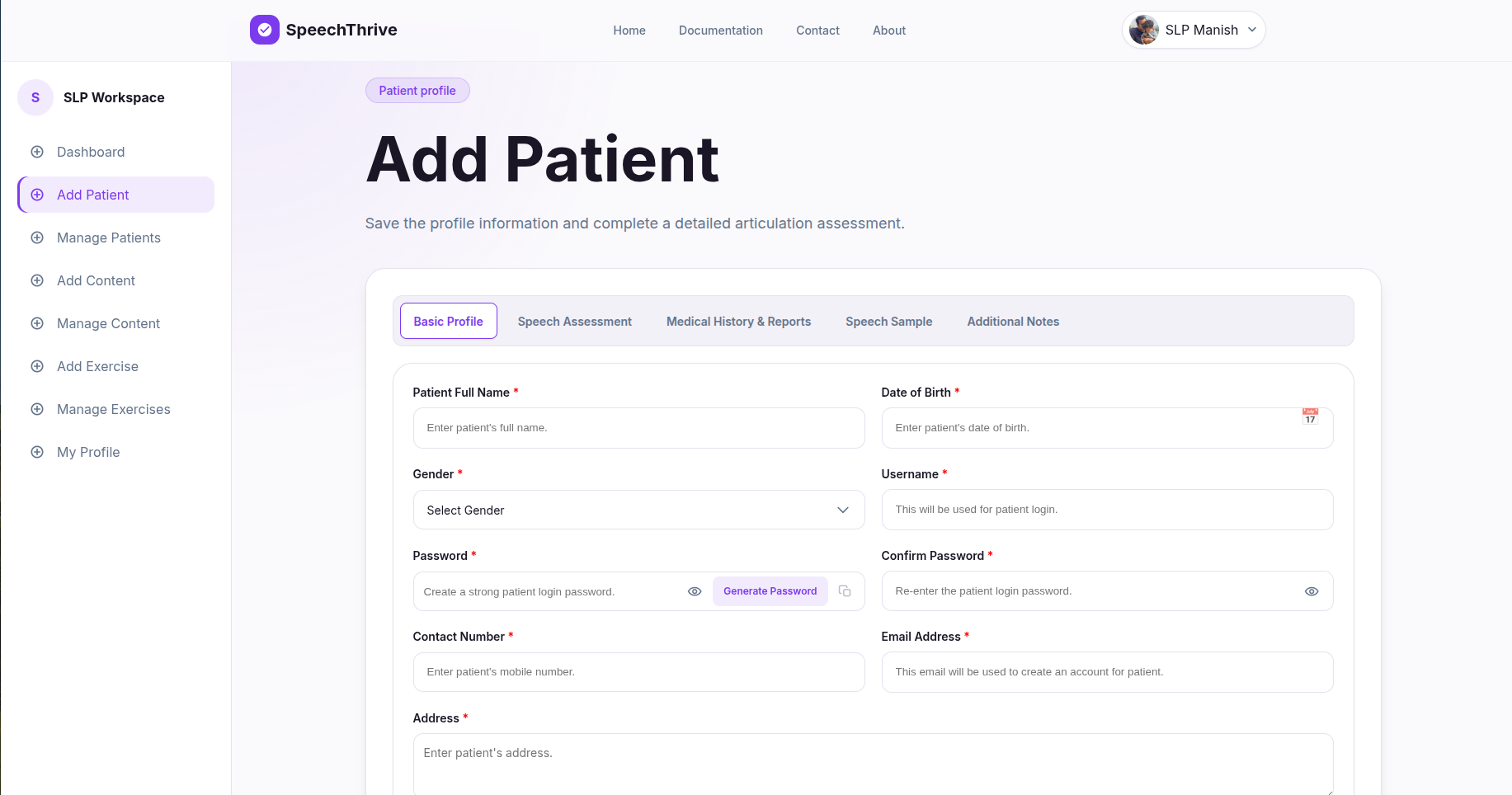
Patients and parents do not self-register. Your SLP creates your profile from Add Patient, sets your username and password, and shares access with you.
Verify your email if prompted, then sign in from login page with the credentials provided by your SLP. Contact your SLP if the login details are missing or no longer work.
The SLP Portal is the control center for your caseload. It gives you quick access to patient management, therapy planning, online appointments, clinical notes, uploaded exercises, custom practice content, and review workflows.
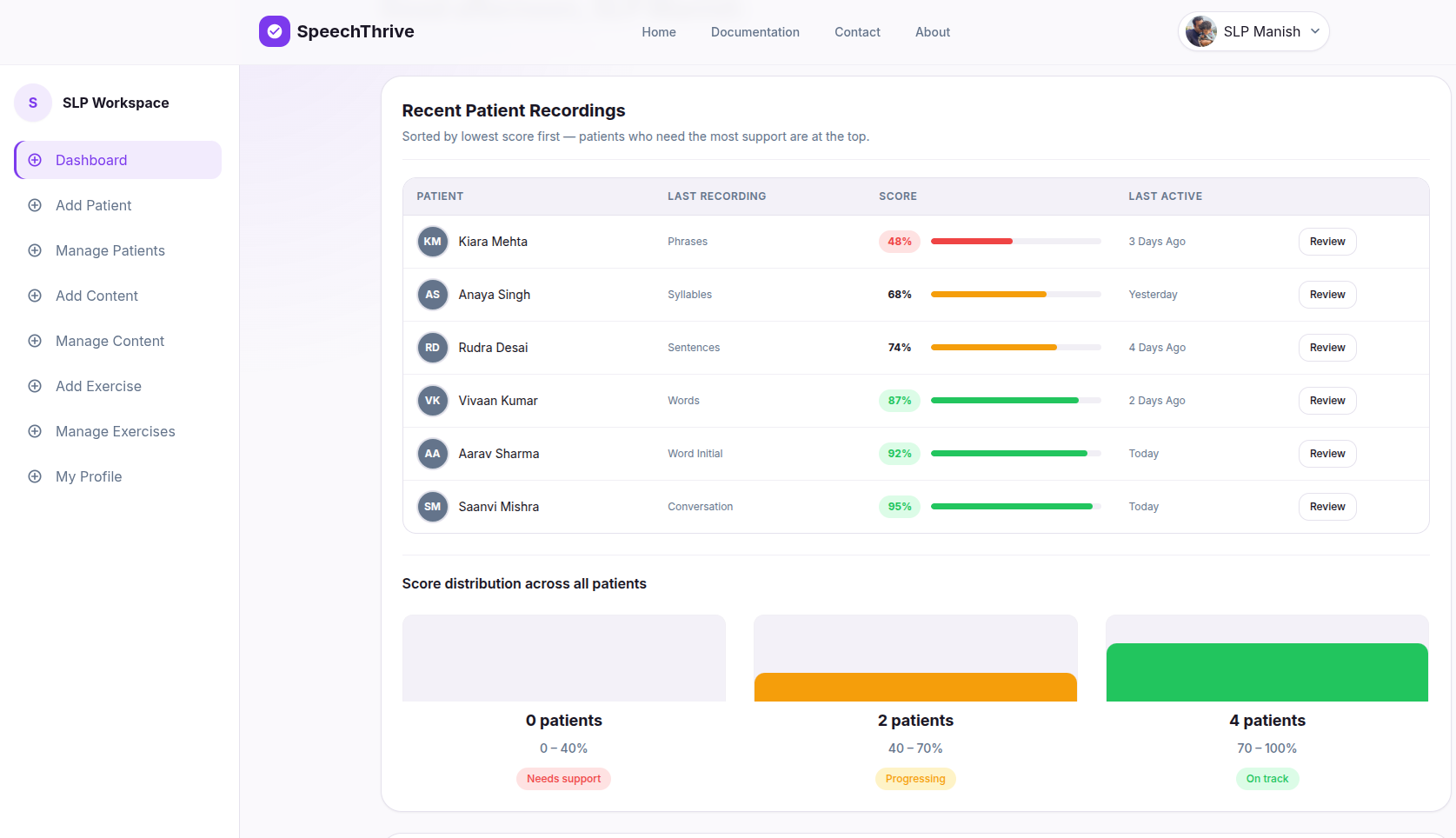
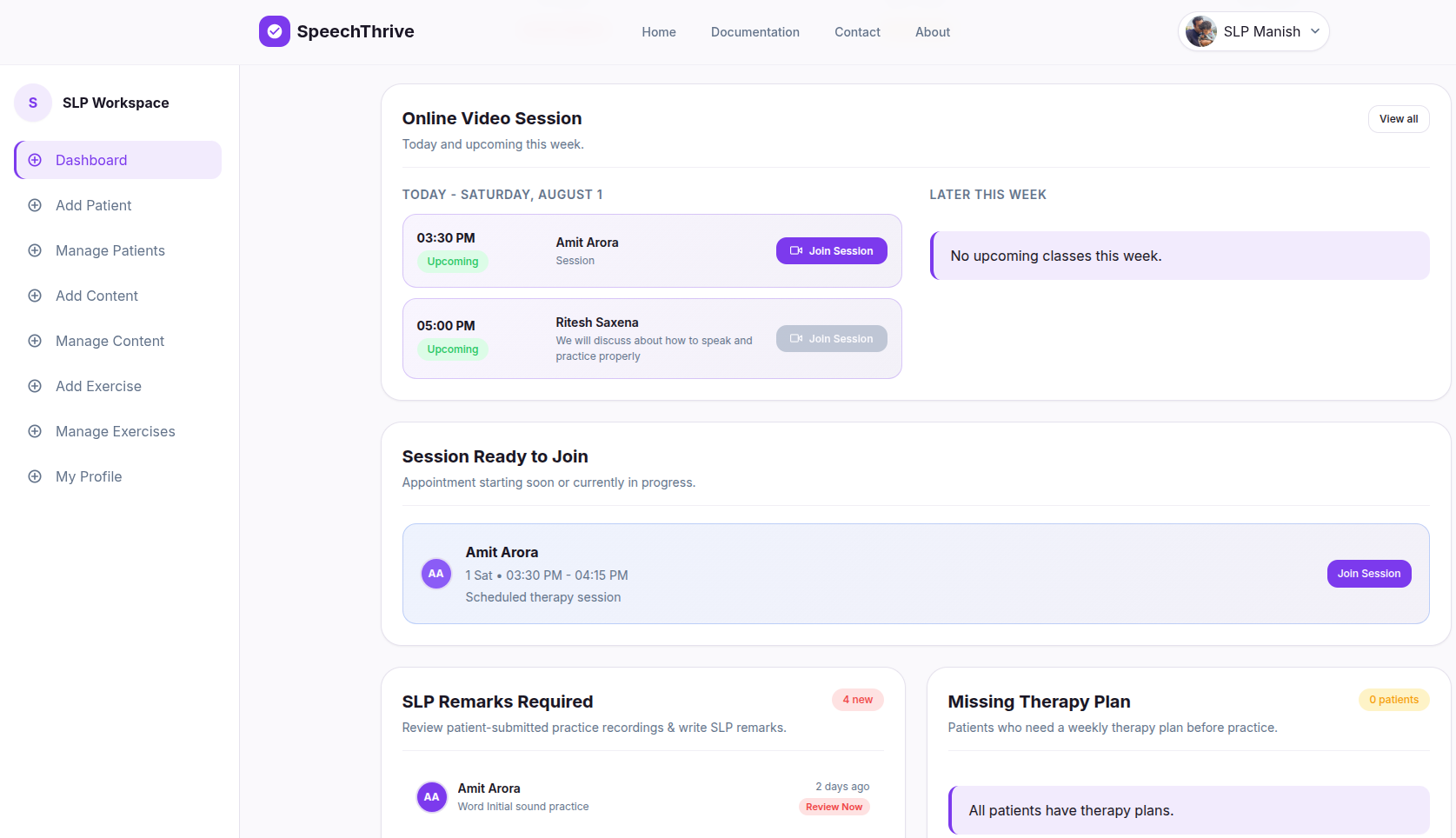
Open the SLP dashboard to review monthly sessions, upcoming appointments, patient activity, recent recordings, and unread chat messages.
Use Add Patient to create the patient login, enter profile details, add parent or guardian information, and start the verification process.
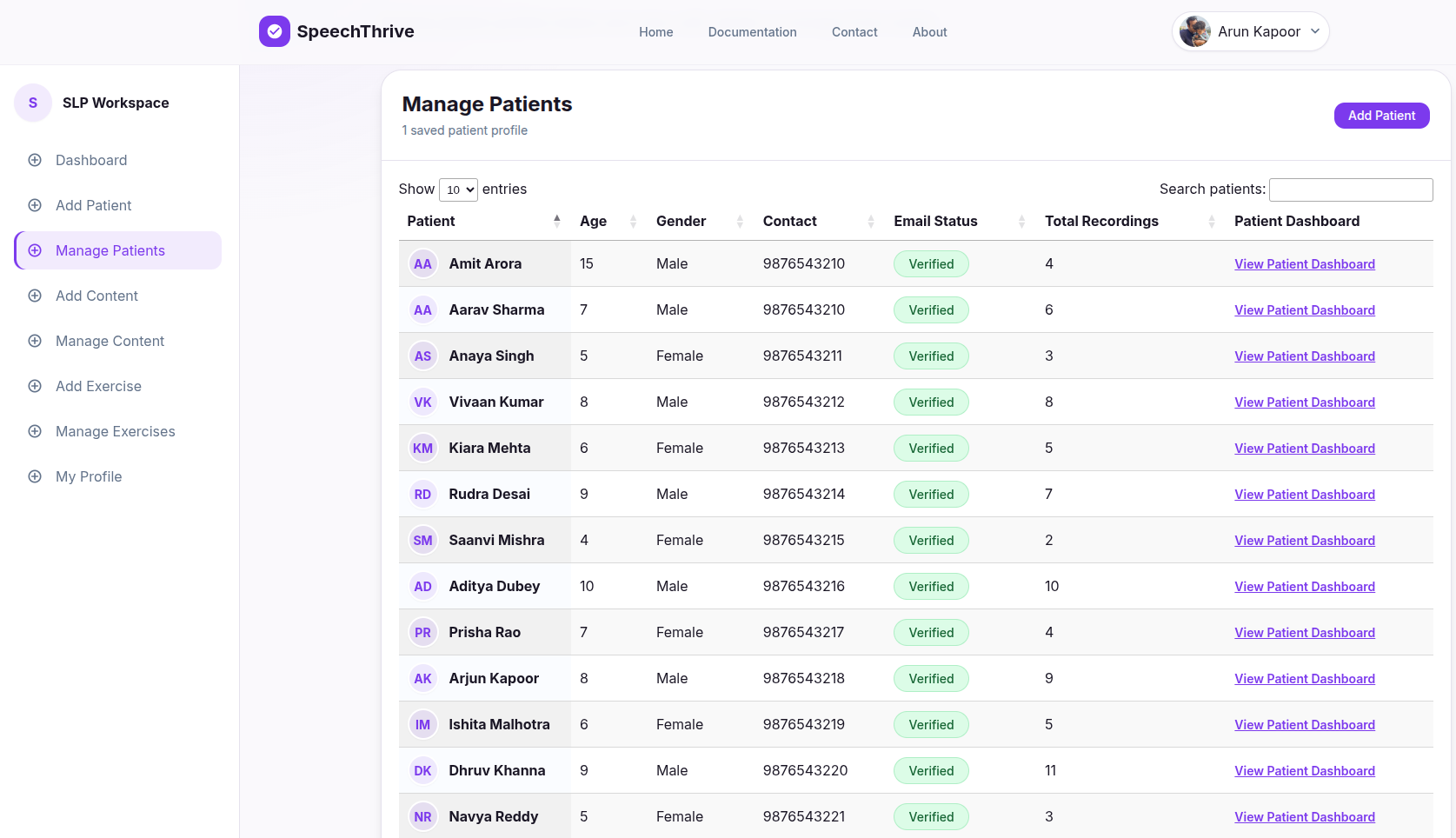
Use Manage Patients to open each patient workspace, update profiles, resend verification messages, and manage account access.
Use Add Content for custom words, phrases, and sentences, then use Manage Content to edit or remove them later.
Use Add Exercise to upload exercise videos and Manage Exercise to maintain the exercise library.
Open My Profile to keep your name, photo, contact details, qualifications, clinic information, and account settings current.
From Manage Patients, open View Patient Dashboard to work with one patient at a time. This workspace brings together assessment notes, online sessions, therapy plans, submitted recordings, progress, private notes, and chat.
Start from Manage Patients, open a patient workspace, and maintain demographics, contact details, parent information, package details, and initial speech assessment data.
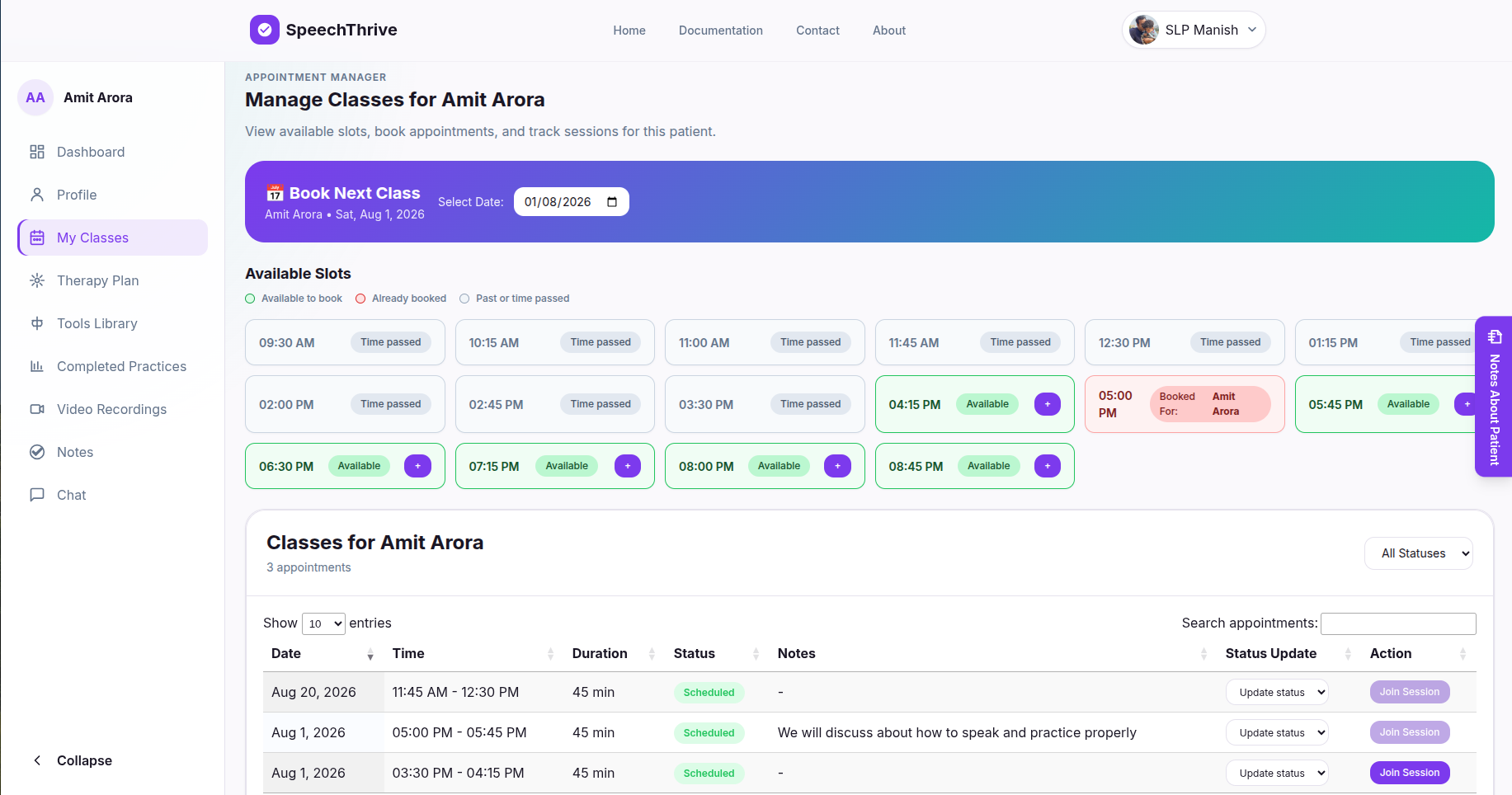
Open the patient workspace from Manage Patients to schedule, reschedule, start, join, cancel, and complete online therapy sessions.
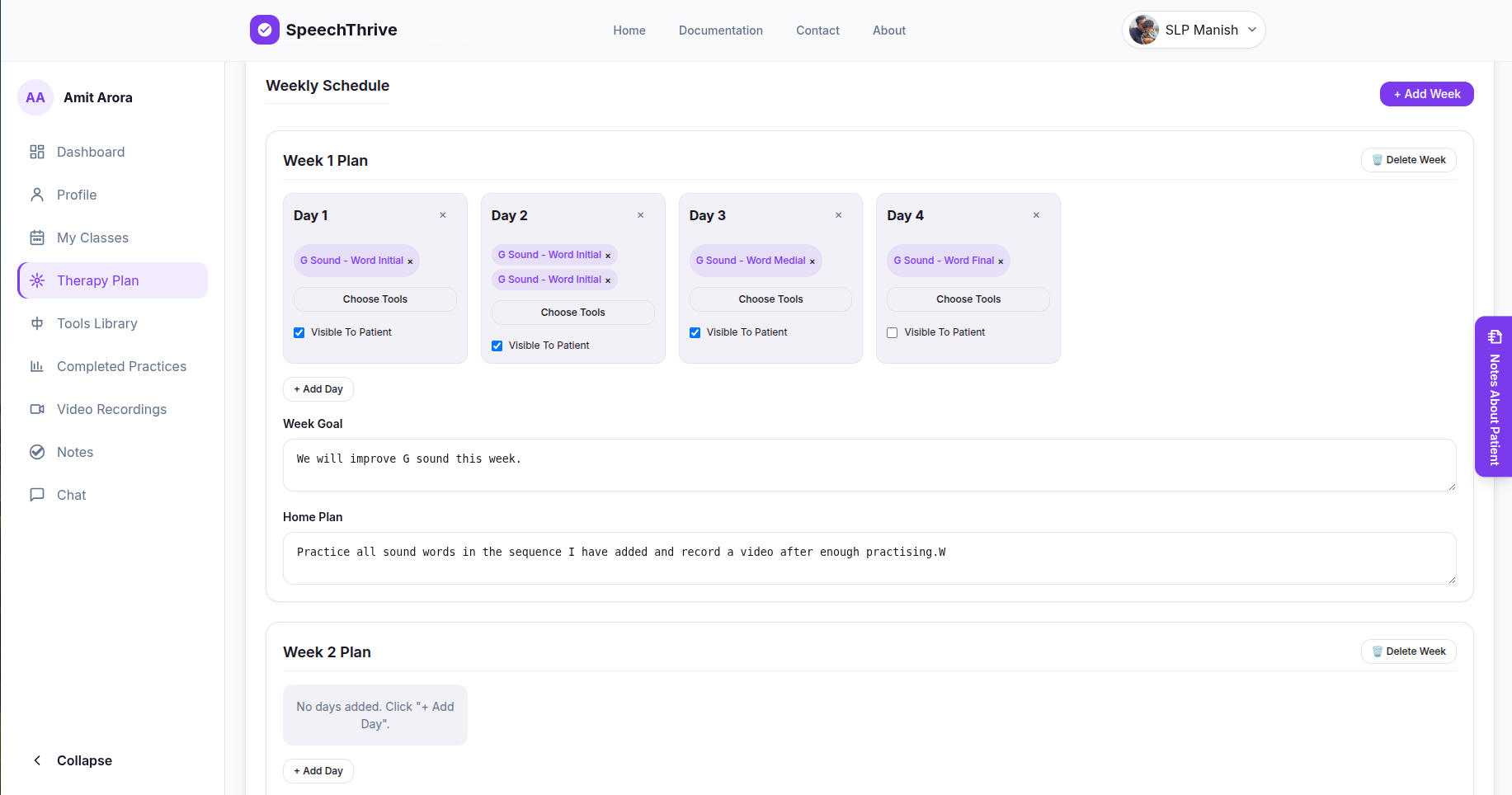
Open a patient dashboard through Manage Patients, then create week-wise and day-wise plans with practice levels, tools, exercises, games, frequency, and instructions.
From the patient workspace, review submitted tasks by assignment, watch recordings, check scores, and provide useful feedback.
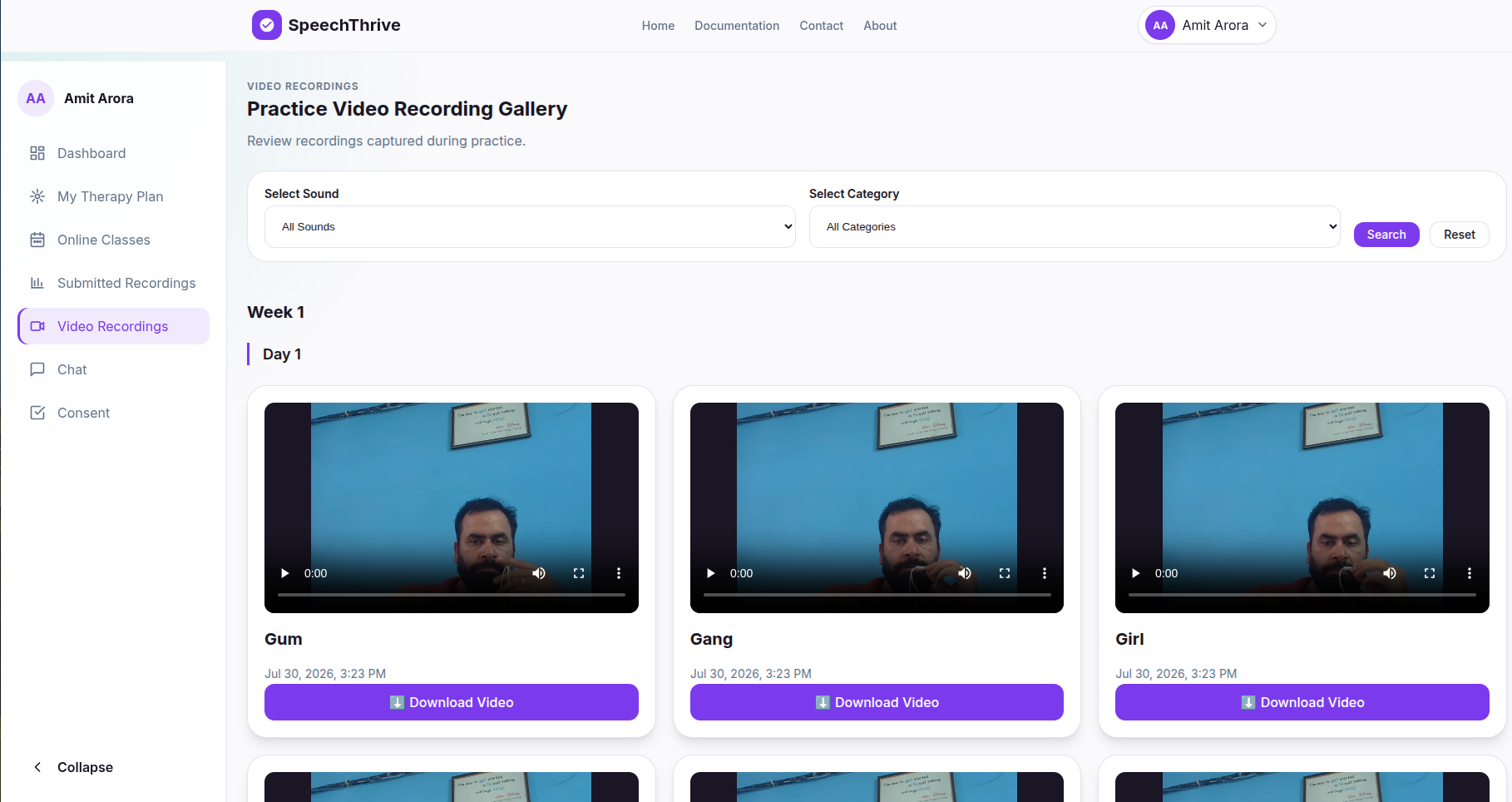
Browse all videos submitted by the patient in one gallery for quick review and comparison over time.
Keep private clinical notes for yourself and use chat for direct patient or parent communication.
The Patient Portal is where patients and parents see what to do next. It shows therapy plans, upcoming online classes, assigned practice tools, submitted recordings, SLP feedback, and chat in a simple guided workspace.
Open your Patient Dashboard to see weekly activities, upcoming sessions, pending practice, recent feedback, progress, and submitted recording counts.
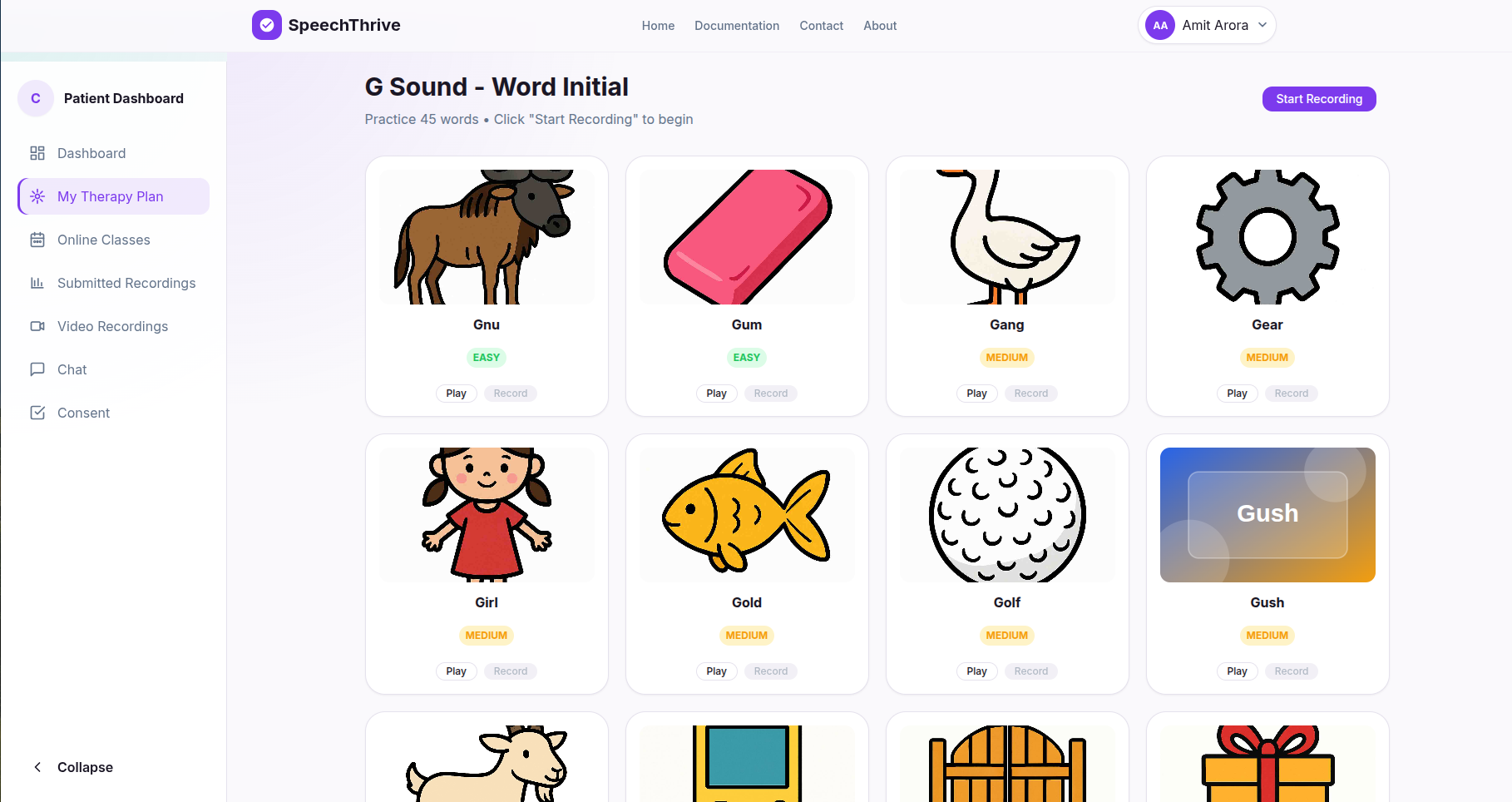
Open My Therapy Plan, follow each daily task, practice as needed, record your video, and submit it for SLP review.
View scheduled sessions from your dashboard, join at the correct time, and review past appointments.
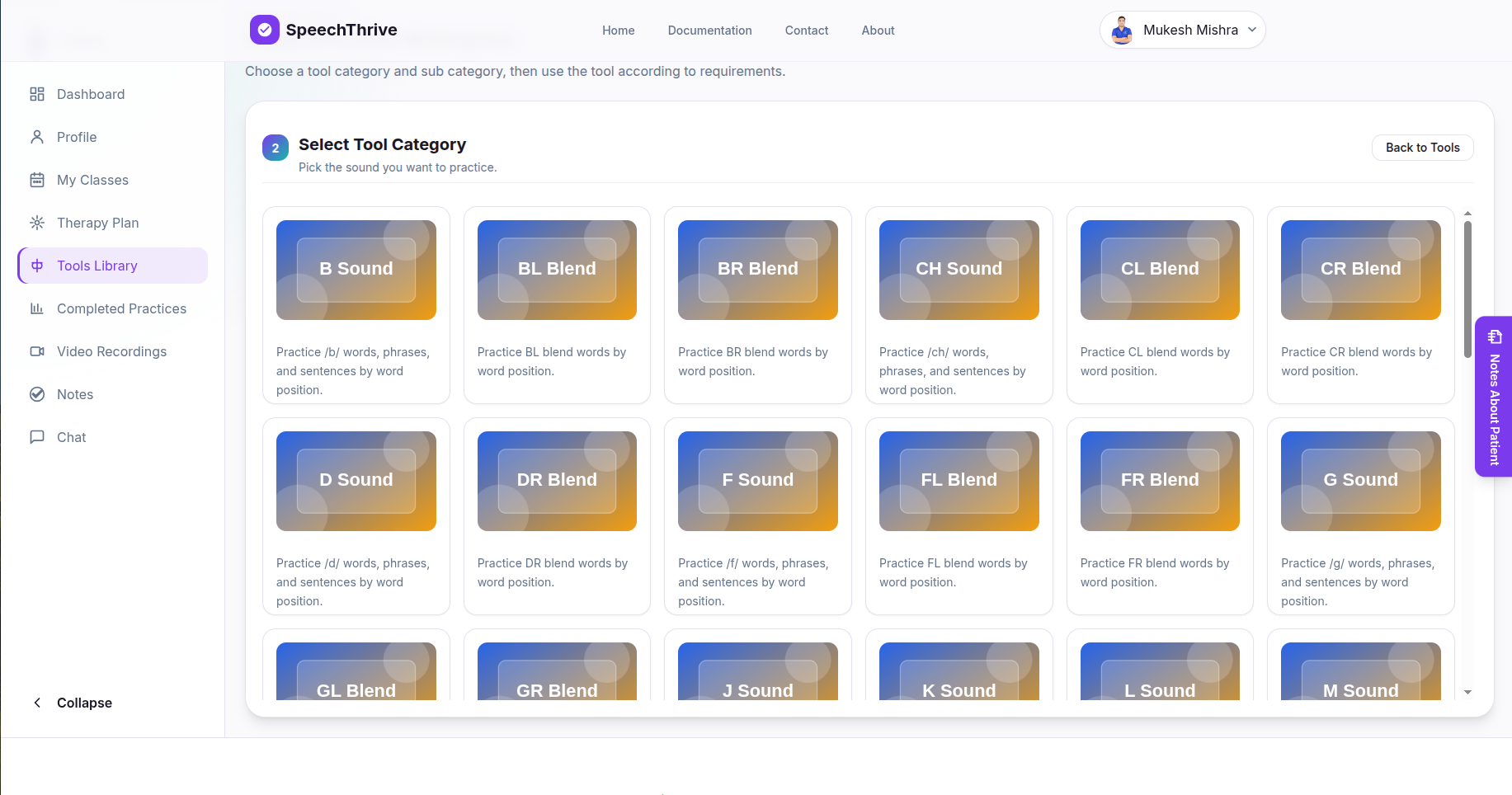
Use Practice Tools and Exercises for assigned sounds, syllables, words, phrases, sentences, interactive games, and memory games.
Open Submitted Practices to track completed tasks, review status, and read feedback from your SLP.
Use Recording Library to find submitted videos and Chat when you need help or scheduling support.
SpeechThrive connects clinical planning with at-home practice so everyone can see the next step clearly.
Use login page to register, verify your email, receive admin approval, and accept the agreement.
Create the patient account from Add Patient and share login details securely.
Run the initial session and document assessment findings.
Build weekly and daily therapy activities for the patient.
Watch submissions, use scores as guidance, and add feedback.
Update the plan as the patient improves or needs more support.
Get your username and password from your SLP, then open login page.
Verify your email if required and open your dashboard.
Attend scheduled online appointments with your SLP.
Open My Therapy Plan and complete the assigned tasks.
Submit practice videos so your SLP can review your work.
Read feedback, keep practicing, and move toward your goals.
Select the hand icon on any image to view it in a full-screen responsive popup. The popup also displays the image alt text as its title.
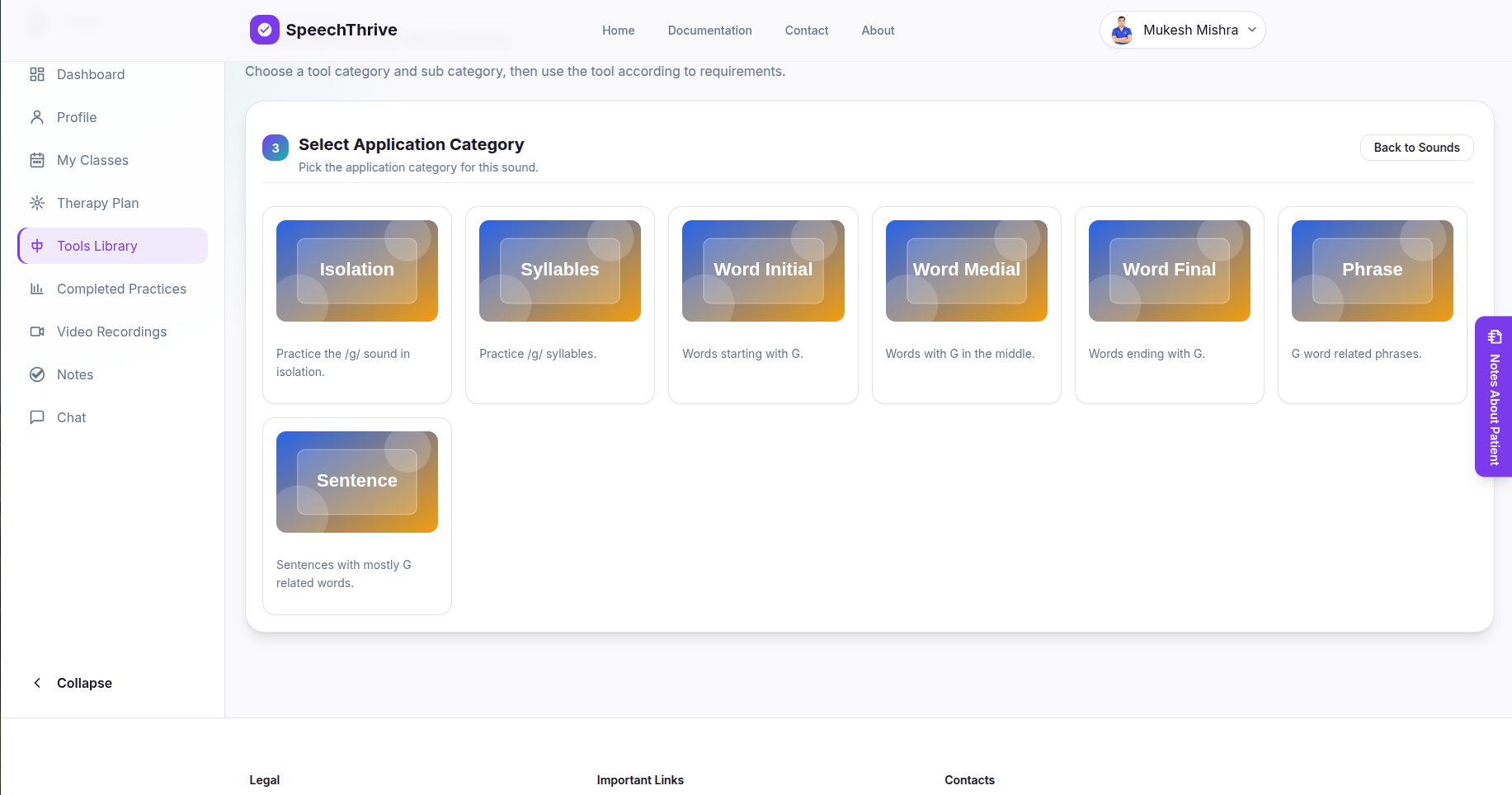
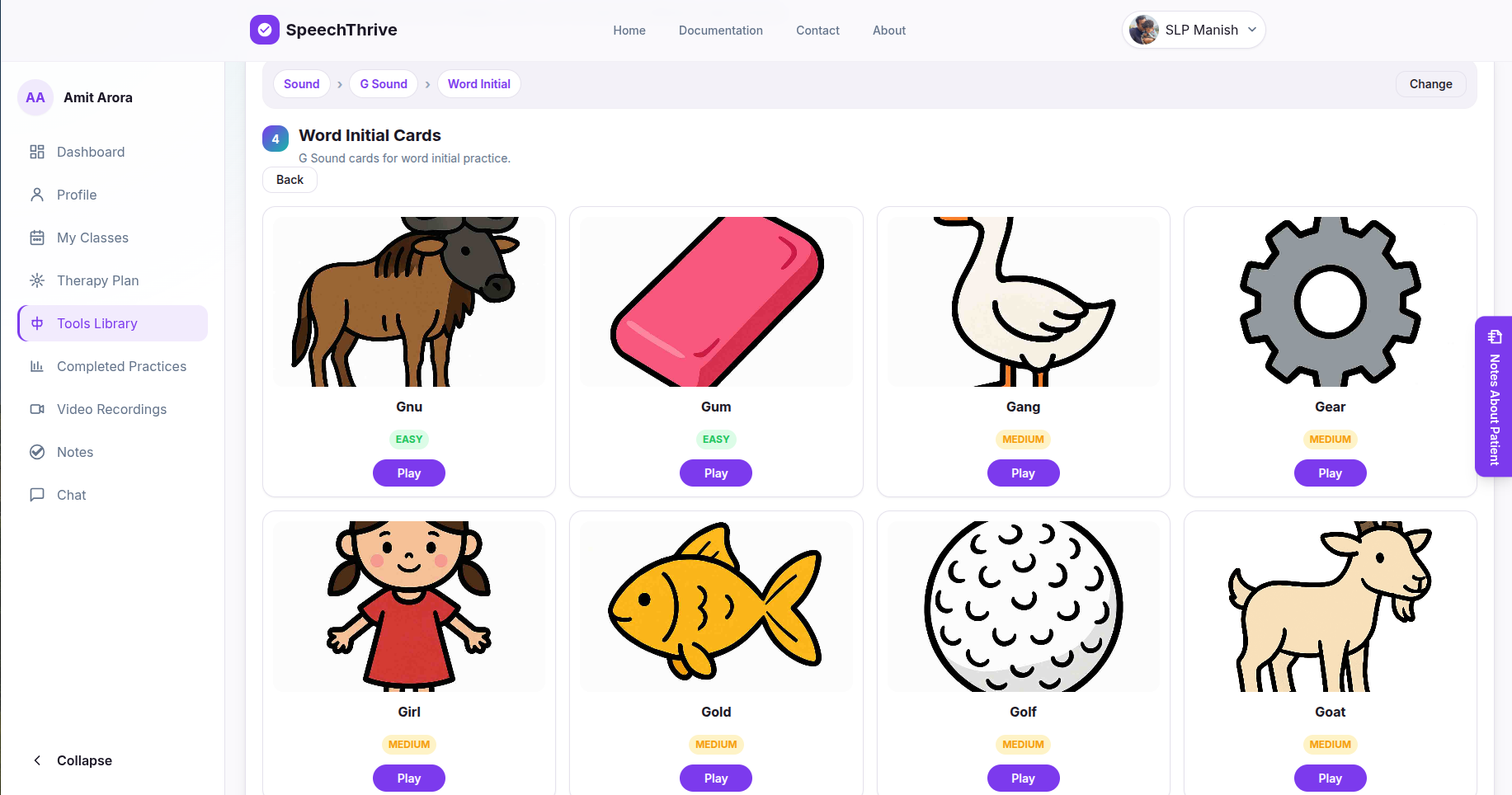
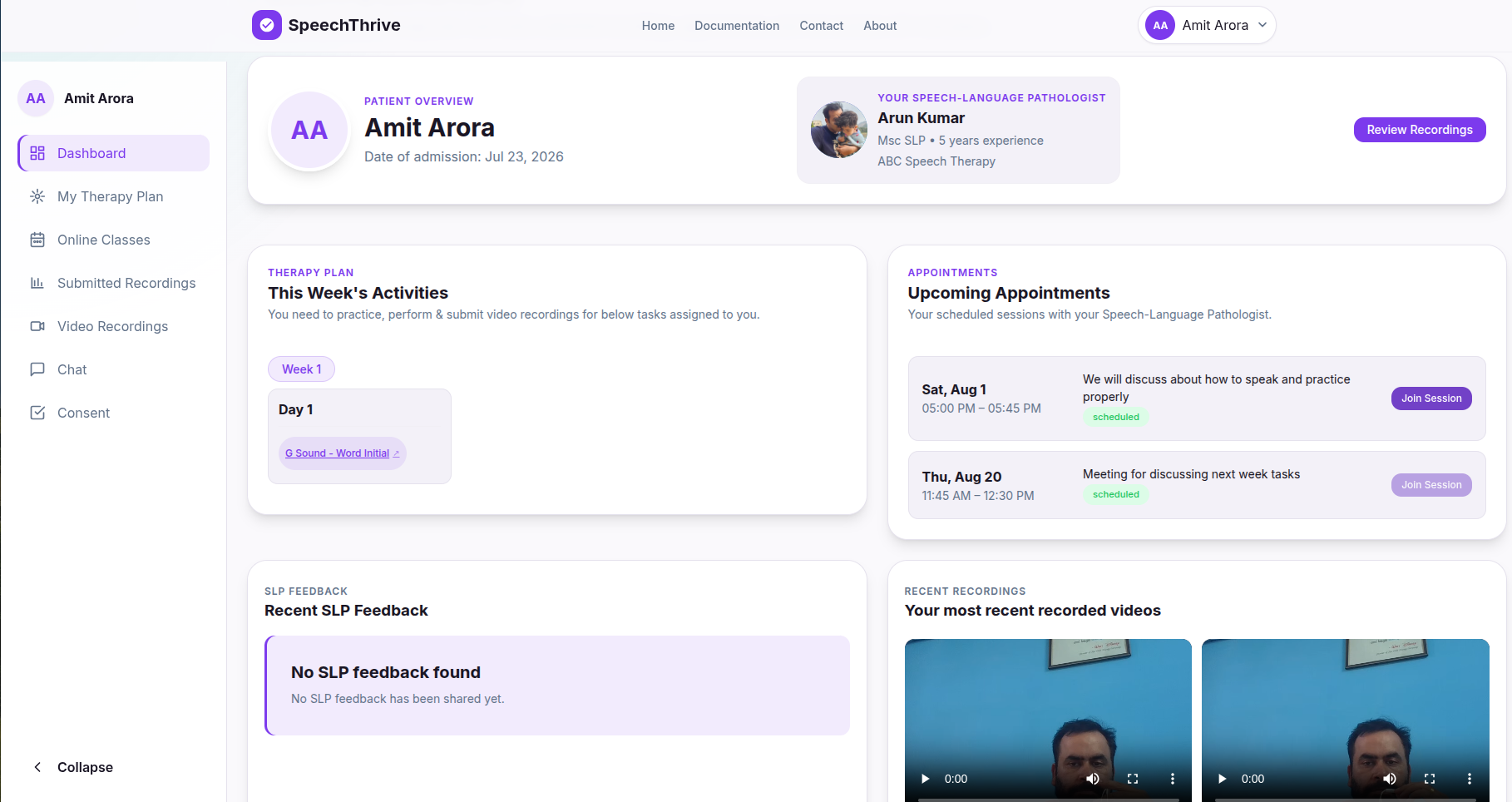
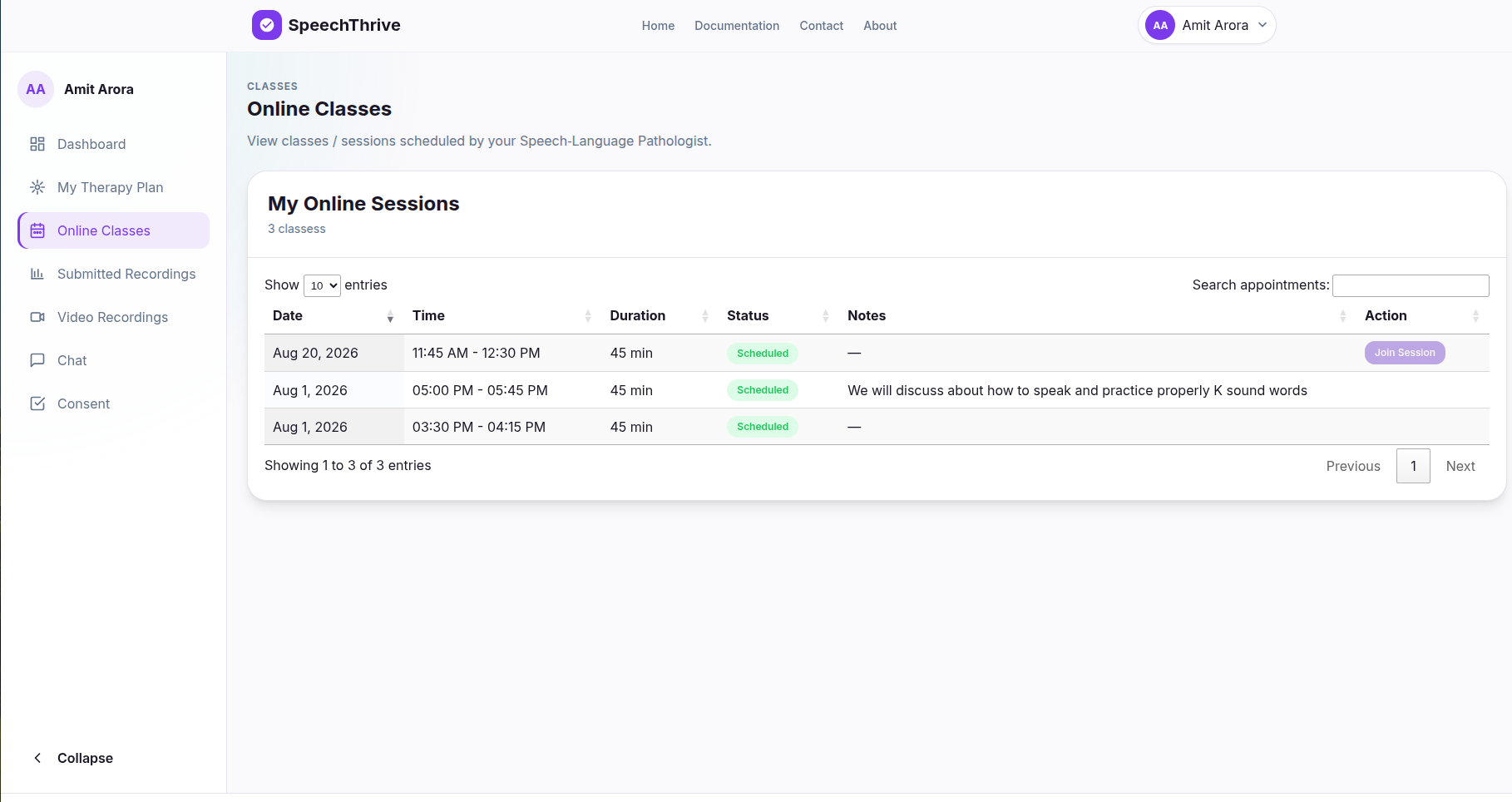


Think of your first day as a guided handoff: set up access, confirm the therapy path, complete one meaningful action, then build a routine around review and feedback.
These questions are written for both clinical users and families starting with SpeechThrive.
No. Patient records, custom content, therapy plans, messages, and submissions are scoped to the correct SLP account for privacy and security.
After using Add Patient, confirm the profile, share the login credentials securely, schedule the first session, and start the assessment record so planning has a clear baseline.
Open the patient workspace from Manage Patients. Therapy plans are organized by week and day, with practice tools, sounds, exercises, games, frequency, and instructions for each day.
Completed Practices groups submissions by assignment and review status. Video Recordings is a broader gallery of all videos submitted by that patient.
No. Notes are private clinical records for the SLP and are not displayed in the patient or parent portal.
No. Use the score as one input. Your review, the recording, patient history, and clinical judgment should guide feedback and plan changes.
No. Your SLP creates your account and shares your username and password with you or your parent or guardian. Once you receive them, use login page.
Open login page, check that you are using the credentials from your SLP, complete email verification if required, and contact your SLP if access still fails.
Open My Therapy Plan from the Patient Portal. Your daily tasks, instructions, tools, and recording options are shown there.
Follow your SLP's instructions. Usually you can practice as much as needed, then submit the recording you want your SLP to review.
No. Scheduling is managed by your SLP. Use Chat to request a change or ask about appointment timing.
Open Submitted Practices to review feedback, review status, and previous submissions. Your dashboard may also show recent feedback highlights.